

As a leader in the construction services industry, EllisDon is committed to driving meaningful change across the built environment and creating a more sustainable future.
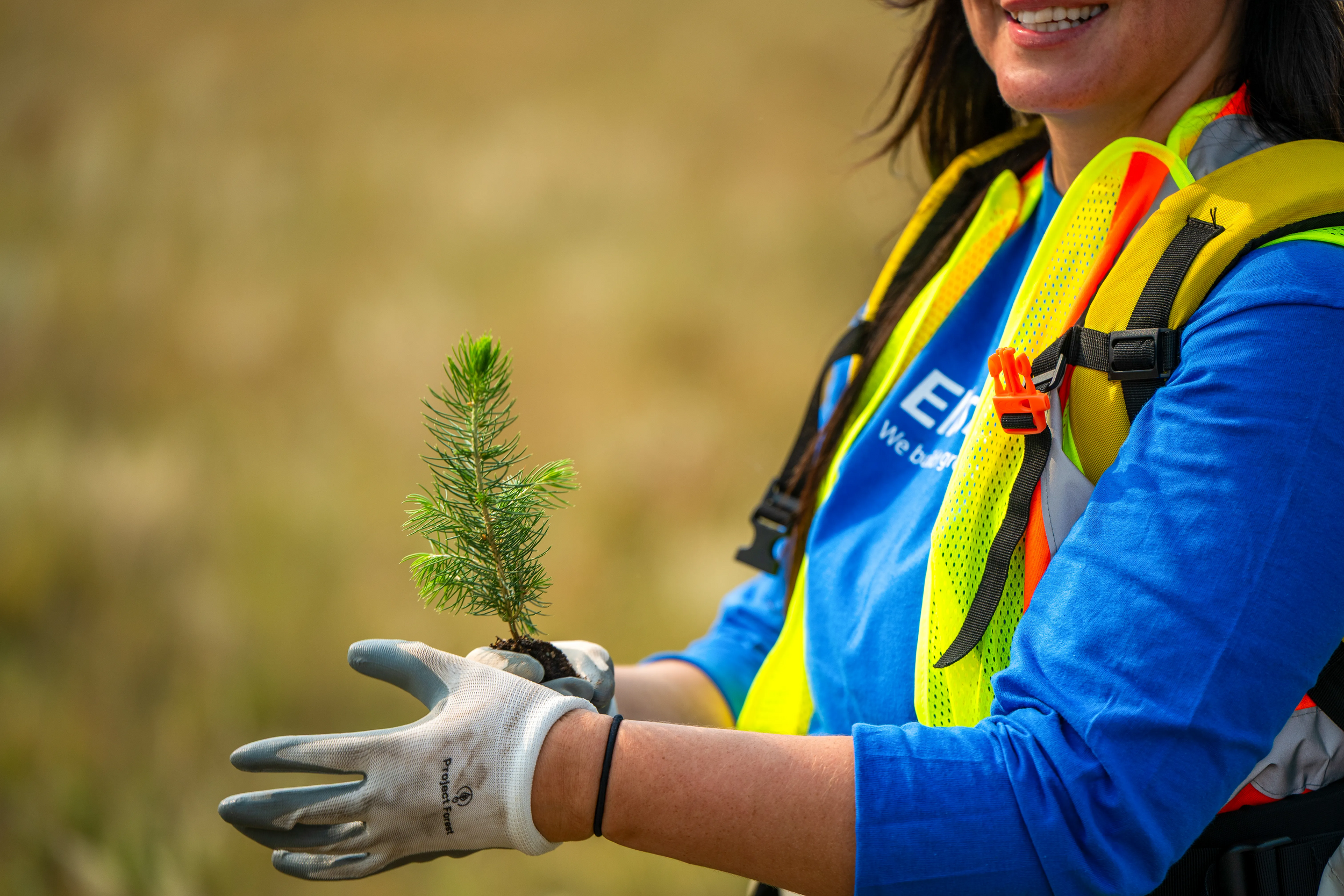
Climate & Environment
CLIMATE
COMMITMENT
The growing and undeniable impacts of climate change make one thing clear: maintaining the status quo is simply not an option. As a leader in the construction services industry, EllisDon is committed to driving meaningful change across the built environment and creating a more sustainable future. Our focus is on reducing carbon emissions from both the construction process and the infrastructure we build and operate.
While our sense of urgency and commitment to action remains strong, we also recognize the scale of the challenge ahead—and the effort required to make real, lasting change in our industry.
The construction sector is navigating a unique set of pressures, including:
Unprecedented growth, fuelled by increasing market and social demand, along with major government investments in infrastructure, housing, and defence.
Heavy reliance on fossil fuels, with limited decarbonization technologies and financing options currently available to match the sector’s fast-paced and complex nature.
Fragmented supply chains, making it difficult to access transparent, reliable emissions data and hindering the development of meaningful, scalable solutions.
Building the Foundation for Change
In 2026, we are refining our official climate targets to ensure they align with a feasible pathway for business growth, operational transition and long-term emissions reductions, while remaining consistent with client expectations and leveraging our leadership position to drive industry-wide change.
Our strategic focus is clear: to decouple emissions from business growth and drive towards net-zero emissions by 2050.
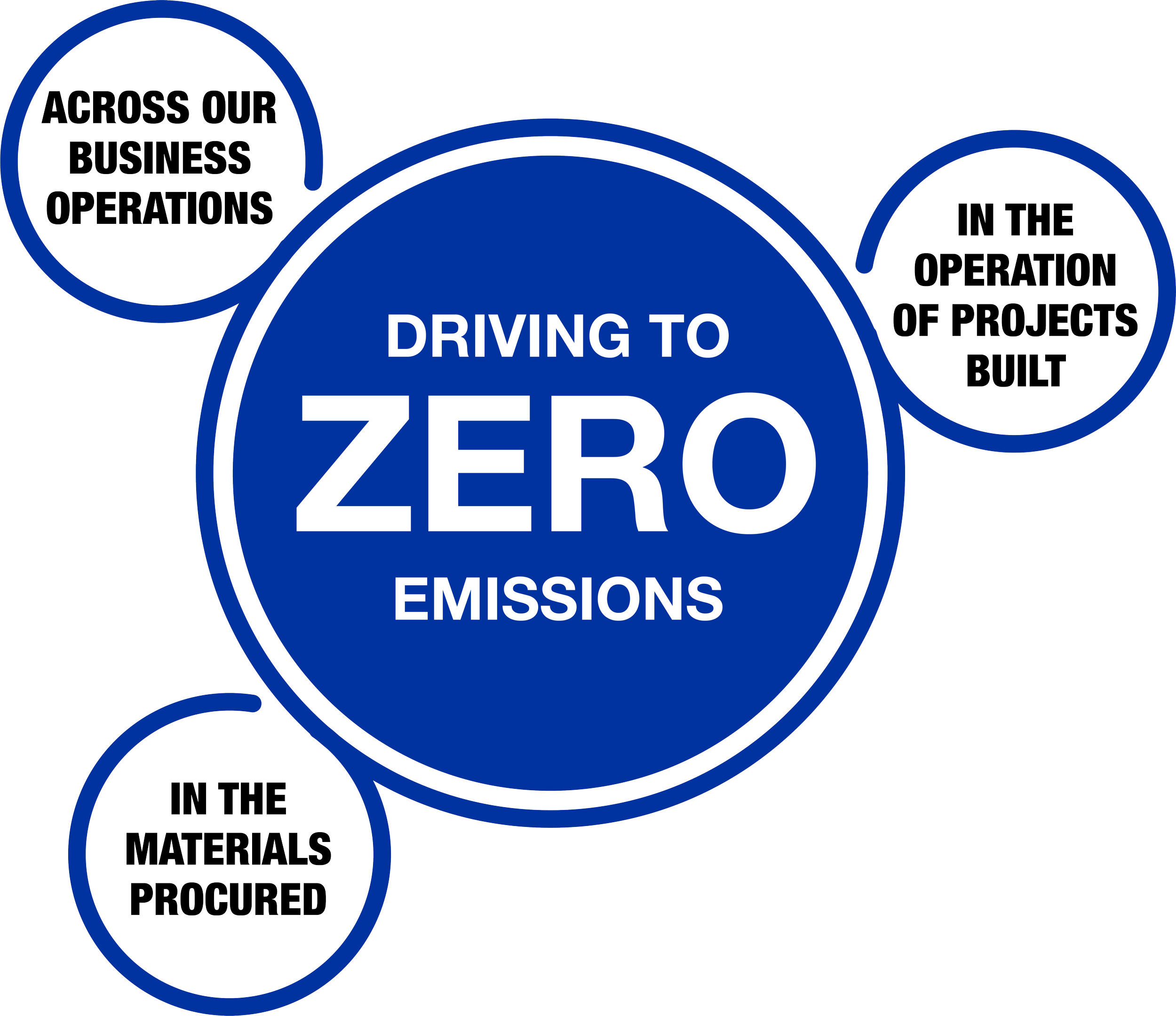
As part of this, EllisDon continues to drive towards zero emissions across:
-
Minimizing emissions from construction sites, assets, and products and services. This will include implementing efficiency measures and/or switching fuels to electricity and renewable options for fleet vehicles, equipment, and our offices.
-
Leveraging supply chain, design and trade partners, and industry organizations to reduce the embodied carbon of the materials that go into the buildings and infrastructure we build, with a focus on structural materials, including concrete, steel, and timber.
-
Assisting EllisDon clients to target and deliver near-zero emissions buildings by employing the entire building services value chain to provide innovative, achievable and cost-effective solutions.
Foundational work is underway to enable absolute emissions reductions for our company and the industry broadly. We’ve made significant progress in improving how we measure and manage our emissions.
For our direct emissions (Scope 1 and 2), we’re investing in better data systems that will give our teams real-time access to energy use and emissions information. This will help projects and business units make more informed decisions and take targeted action to reduce impact.
For our indirect emissions (Scope 3), we are focused on establishing processes to embed carbon considerations into key areas like design, material procurement, and subtrade operations. This will strengthen our ability to manage and reduce emissions across our full value chain.
We recognize that waiting for perfect data is not feasible. It is critical that we continue implementing emissions-reduction measures now, even as we expand and refine our data-collection processes. In recent years, EllisDon has introduced several decarbonization initiatives, as outlined in the sections below. Through focus, collaboration, and continuous improvement, we believe we can—and will—help lead the way to a net-zero future for our company, our industry, and the communities we help build.
EllisDon’s
Emissions Profile
For our direct emissions (Scope 1 and 2) we have seen an increase in our year-over-year absolute emissions, driven by business growth and enhanced data accuracy from improved tracking processes. What we are seeing, however, is a decrease in carbon intensity per dollar revenue, in line with our efforts to decouple our emissions from our business growth. With reduction strategies actively being deployed on our sites, we will continue to drive towards reducing the carbon intensity of our operations. Absolute values and an overview of the methodology for Scope 1, 2, and all applicable Scope 3 categories can be found on the Greenhouse Gas Emissions & Methodology Report.
View the full report here:

In 2025, we focused on strengthening our direct emissions data tracking processes by developing an in-house AI-based tool, which will allow us access to more granular, real-time data. In addition, by partnering with sub trades on selected pilot projects, we evaluate the emissions from all construction site activities—including those not directly under our control—focusing on sub trade energy consumption and material transportation. This approach helps us create targeted reduction strategies and address currents information gaps in the market.
Key findings to date include:
Construction heating in Canada is a major source of energy use and emissions, especially on large-scale building projects.
Site-specific factors such as location and conditions significantly influence both costs and emissions—primarily through material transport distances and the demands of intensive below-grade work.
Regional variation remains significant, shaped by project type, energy infrastructure, and climate.
Current Whole-Building Life Cycle Assessments tend to underestimate emissions from construction site activities (A4-A5), by as much as 2-3 times, highlighting the need for more accurate measurement.
Enhanced on-site emissions tracking is required to improve data quality, notably by collecting more as-built material quantities to validate design estimates.

Driving to
Zero Emissions
Driving to Zero Emissions:
Across Business Operations
EllisDon is investigating and implementing multiple short-, medium-, and long-term initiatives to reduce our direct on-site emissions, as highlighted in the decarbonization roadmap below.
Building on previously launched hybrid generator and renewable diesel projects, EllisDon introduced and tested several new decarbonization initiatives in 2025 aimed at reducing emissions from temporary heating and our light-duty vehicle fleet. In 2026, we will continue expanding the deployment of these strategies and will explore additional solutions to lower fuel consumption and emissions from temporary heating and earthworks activities.
-
As part of our broader initiative to enhance our winter heating methods, we are working to standardize the use of smart heating controls. These systems enable real-time monitoring and remote management of heaters, allowing us to adapt efficiently to changing requirements, reduce labour costs, and cut fuel consumption. The benefits of this approach were evident in three civil projects active in Ontario during Winter 2024-2025: over several months, these sites collectively saved more than 235,000 litres of diesel, prevented 631 tonnes of CO₂e emissions, and achieved cost savings of over $338,000.
-
EllisDon’s right-sizing fleet matrix has been finalized and is now actively guiding vehicle evaluations, helping identify where SUVs or hybrids can replace larger trucks. We are aligning our light-duty fleet with both operational needs and emissions reduction goals by transitioning to efficient, right-sized vehicles—prioritizing smaller and more sustainable models where feasible—guided by telematics data, a rightsizing fleet matrix, and close collaboration with our fleet managers.
Through our Smart Idling Program, we are also focusing on reducing unnecessary vehicle idling to lower fuel use, greenhouse gas emissions, costs, and air pollution, while ensuring driver safety and comfort in extreme weather conditions. Real-time telematics data will enable us to monitor performance and continuously identify new opportunities for improvement.
PROJECT HIGHLIGHT
Windjammer Landing: Preserving Paradise
LABRELOTTE BAY, SAINT LUCIA

EllisDon is a diverse company, with assets that include the Windjammer Landing Resort and Residences located in Saint Lucia. This Caribbean destination has received recognition from Forbes Travel Guide and Travel + Leisure and is a member of Leading Hotels of the World.
Windjammer Landing has earned recognition for its commitment to sustainability, implementing a Green Globes-certified program that targets water, energy, and waste management. It is honoured as a Sustainability Leader by Leading Hotels, making it one of only two Caribbean hotels to receive this distinction.
-
Prioritizing renewable energy sources by leveraging our solar panel system, which generated an impressive 658,000 kWh of renewable energy to date, resulting in approximately 518 tCO₂e emissions avoided.
Reducing energy waste in unoccupied spaces by maintaining our Isolation Program, ensuring vacant villas are disconnected from energy-intensive utilities.
Continuing the improvement of our cooling and refrigeration systems across the property, by upgrading to R290, a more sustainable and energy-efficient refrigerant.
Utilizing a greywater treatment system to support irrigation, saving approximately 280,000 - 300,000 litres of potable water in 2025.
Operating waterless urinals and dual-flush toilets in kitchens and restaurants to reduce water use, promote sustainable operations, and lower costs.
Supporting local circular economy initiatives by partnering with Replast St. Lucia to recycle HDPE plastic bottles into new furniture and working with a local recycler to repurpose non-functional air conditioners and solar water tanks, helping divert waste from landfills and reduce environmental impact.
Prioritizing durable, resilient materials for renovations and upgrades to ensure construction and renovation projects are eco-friendlier and more long-lasting.
$73B
Value of Sustainability Projects
282
Number of Sustainability Projects
Driving to Zero Emissions:
In the Operations of Projects Built
EllisDon provides design, construction management, and operational services for high-performance buildings and infrastructure. Our projects and services contribute to the low-carbon building stock across Canada, and we are continuously looking for opportunities to help our clients better understand and reduce their assets’ operational emissions across their lifetime.
We have delivered or are actively working on over 282 projects targeting LEED, Net-Zero and other high-performance sustainability targets with a total construction value of over $73 billion.
PROJECT HIGHLIGHT
North Bay Community and Recreation Centre
NORTH BAY, ONTARIO
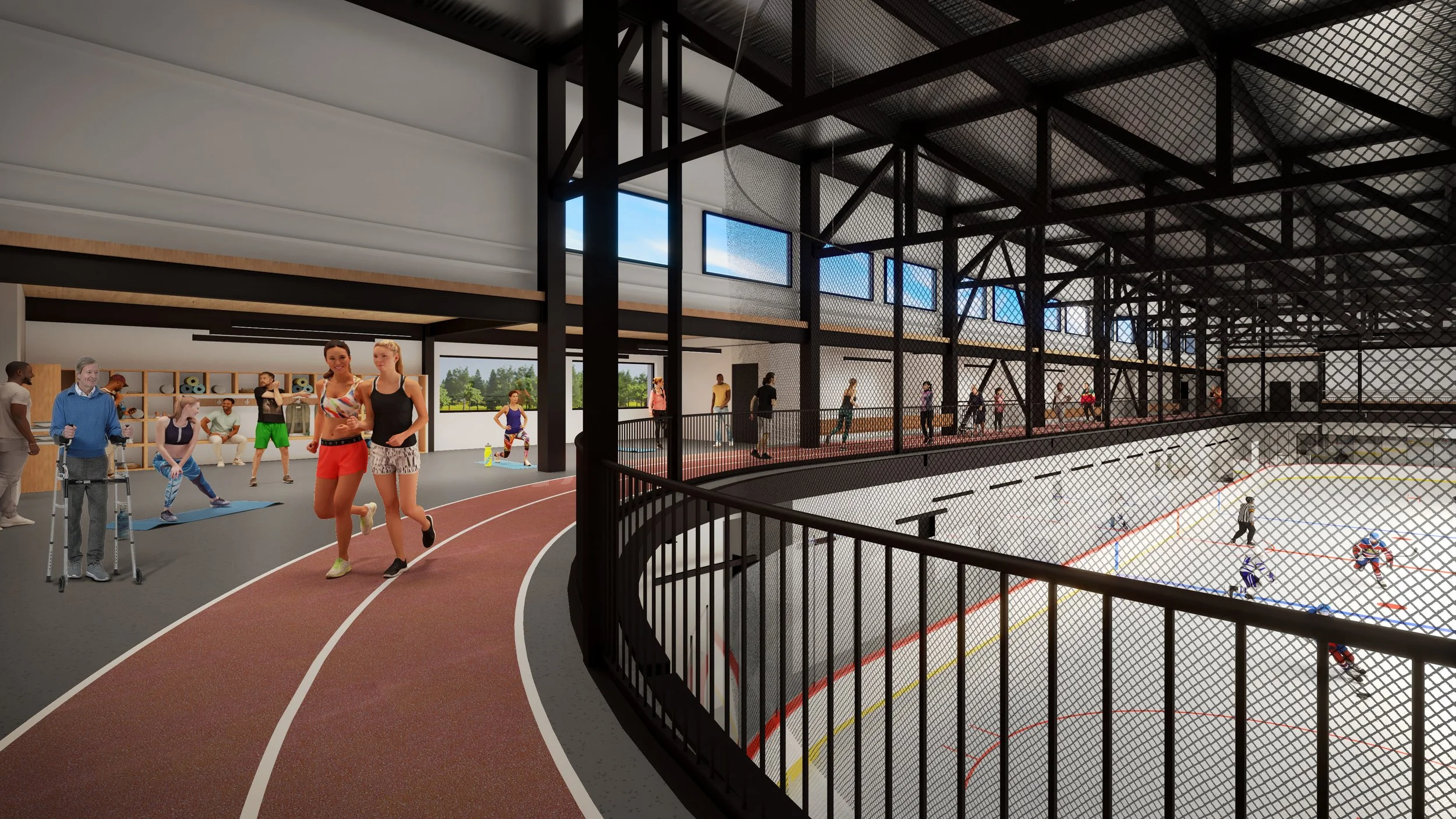
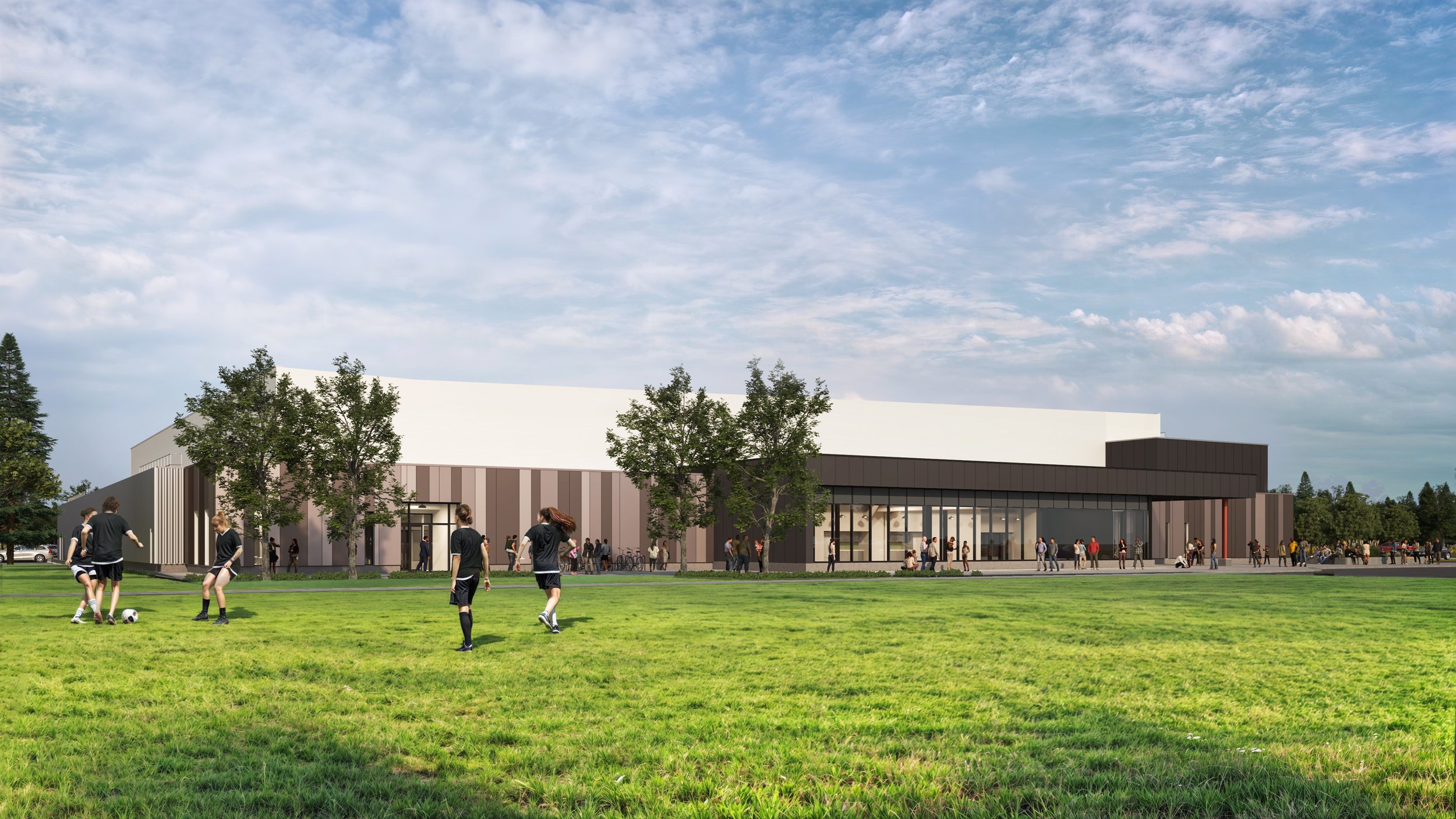

EllisDon is proud to be leading the design-build of Canada’s first Zero Carbon Building – Design certified arena complex. The twin pad and community building, located at the Steve Omischl Sports Complex, exemplifies our ability to redefine standards and leverage innovative solutions, creating spaces that push boundaries while building community.
The City of North Bay selected the sustainability criteria outlined in the Green and Inclusive Community Buildings (“GICB”) grant, which requires achieving Zero Carbon Building - Design certification. Our team implemented advanced sustainability measures that exceeded program standards while adhering to strict logistical constraints, resulting in a projected 26% reduction in energy consumption and nearly 50% lower carbon emissions compared to conventional designs.
-
All-electric mechanical systems for space and water heating – no on-site heating combustion;
Cold water flooding with de-aerated water for better ice quality and lower energy demand;
Nail-laminated timber ceilings and a highly insulated, airtight envelope;
Solar-ready roof and battery-ready electrical service;
Triple-glazed windows and optimized daylighting;
Full thermal partitions between hot and cold zones; and
Low-emissivity rink ceiling to reduce radiant heat transfer.
At the heart of the building’s energy strategy is the CO₂-based ice plant – a first for EllisDon and among the earliest in Canada. This advanced system employs CO₂ as a climate-friendly refrigerant that not only cools the rink but also allows for capture and repurpose of waste heat. The recovered energy is used to pre-heat domestic hot water and warm the floors below the spectator seating and running track, eliminating the need for natural gas.
PROJECT HIGHLIGHT
TELUS Ocean
VICTORIA, BRITISH COLUMBIA
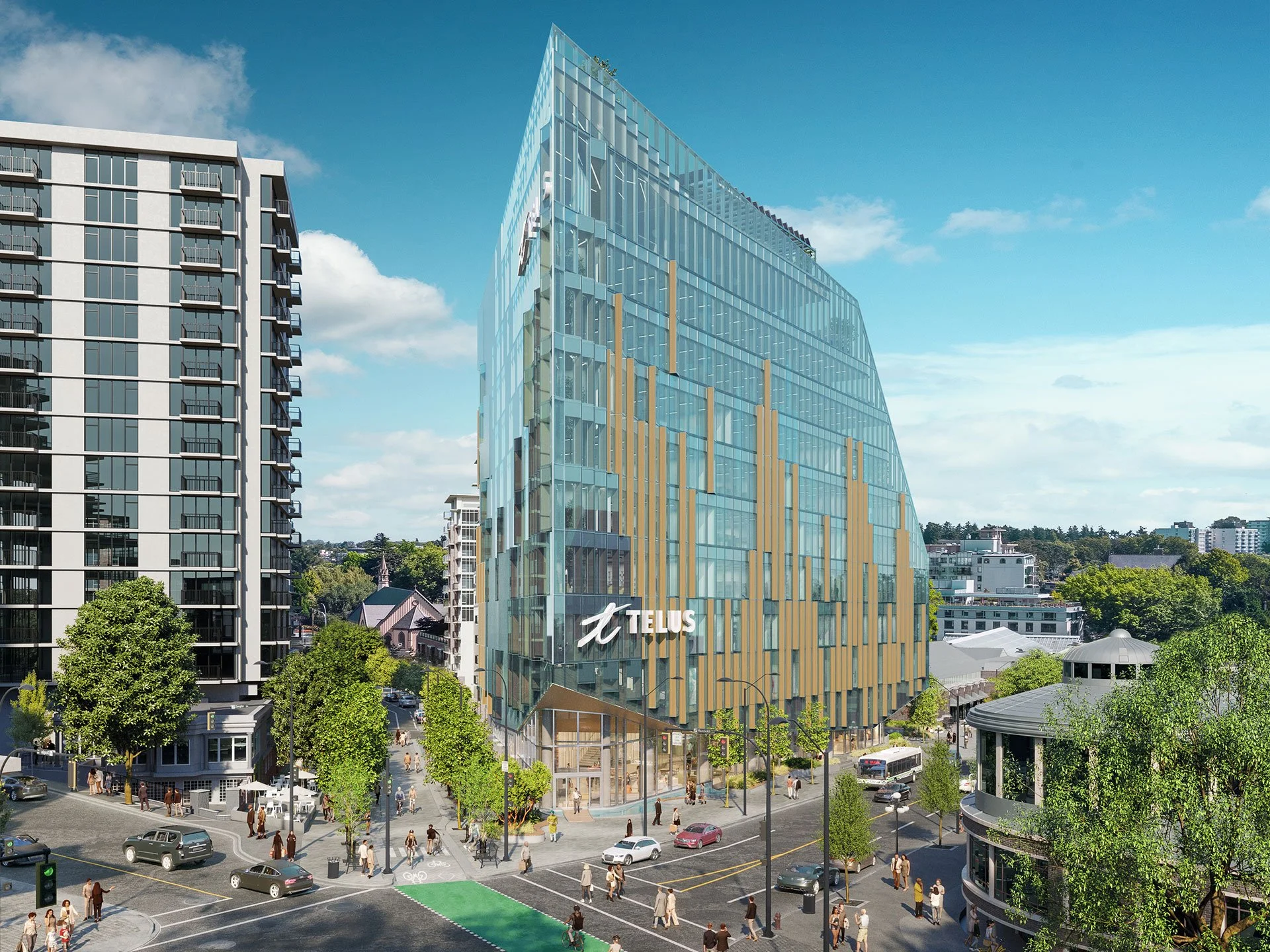
Located in downtown Victoria, British Columbia, TELUS Ocean exemplifies a progressive approach to development. The project prioritizes sustainability, pairing a high-performance structure and systems with care for the local environment and human well-being.
The project is targeting LEED Platinum and Zero Carbon Building Standard - Design. To achieve these certifications, the design and project teams have:
Installed high-efficiency HVAC systems to reduce operational energy use;
Used low-carbon concrete and other responsibly sourced materials to help reduce embodied carbon;
Diverted over 80% of construction and demolition waste from landfills;
Reduced indoor and outdoor water use through efficient landscaping and irrigation systems, and by installing low-flow fixtures and water-efficient appliances; and
Incorporated design elements that encourage physical activity, allow access to daylight, and promote mental well-being through a connection to nature.
A highlight of the Ocean building is its pursuit of Salmon-Safe Certification – a third-party program that recognizes practices that are specifically designed to protect the various endangered species of salmon on the West Coast. To qualify for this certification, we:
Completed careful excavation and shoring work, removing significant quantities of existing contaminated soil;
Undertook strict water treatment and management procedures to ensure local salmon habitats and populations were protected from construction; and
Incorporated landscaping that supports biodiversity.
Advancing Sustainable Operations and Energy Efficiency in Existing Buildings
Through integrated management, advanced technologies, and a strong commitment to innovation, EllisDon continues to lead in sustainable operations and energy efficiency for existing buildings—supporting organizations in achieving both environmental and operational objectives.
EllisDon Facilities Services (“EDFS”) provides comprehensive infrastructure and asset management solutions, delivering efficient operations and maintenance across a range of sectors. Their expertise supports improved asset performance, extended equipment lifecycles, and cost-effective service upgrades. To reduce operational energy use, EDFS set an internal target of achieving 5% weather-normalized energy savings at each site by 2025. This target has been achieved at multiple sites, resulting in portfolio-wide savings of approximately 8%.
These results are driven by a combination of strategies and technologies, including diagnostic platforms like Clockworks, which integrate with Building Automation Systems to automate fault detection, prioritize corrective actions, and enhance energy performance.
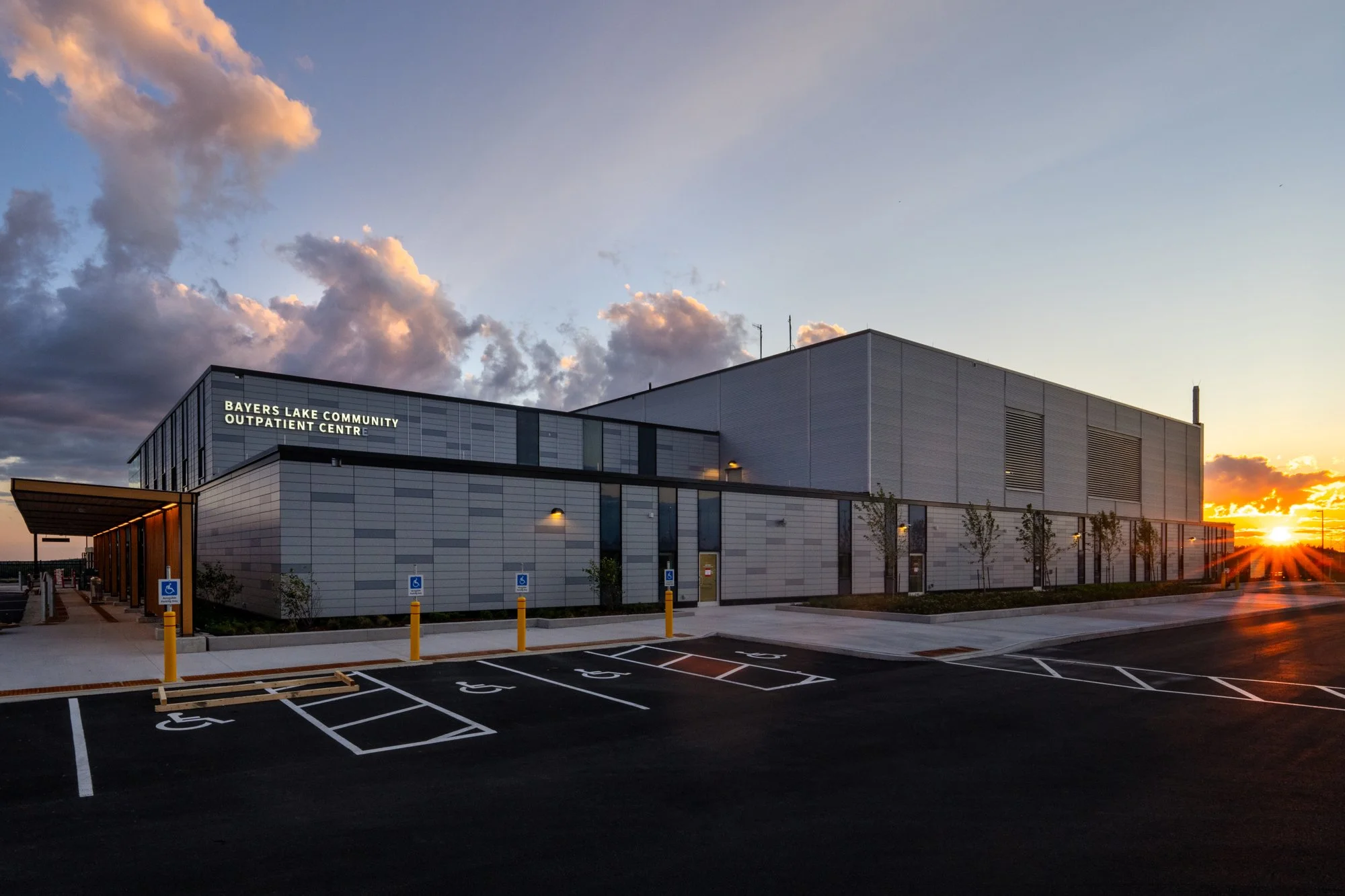
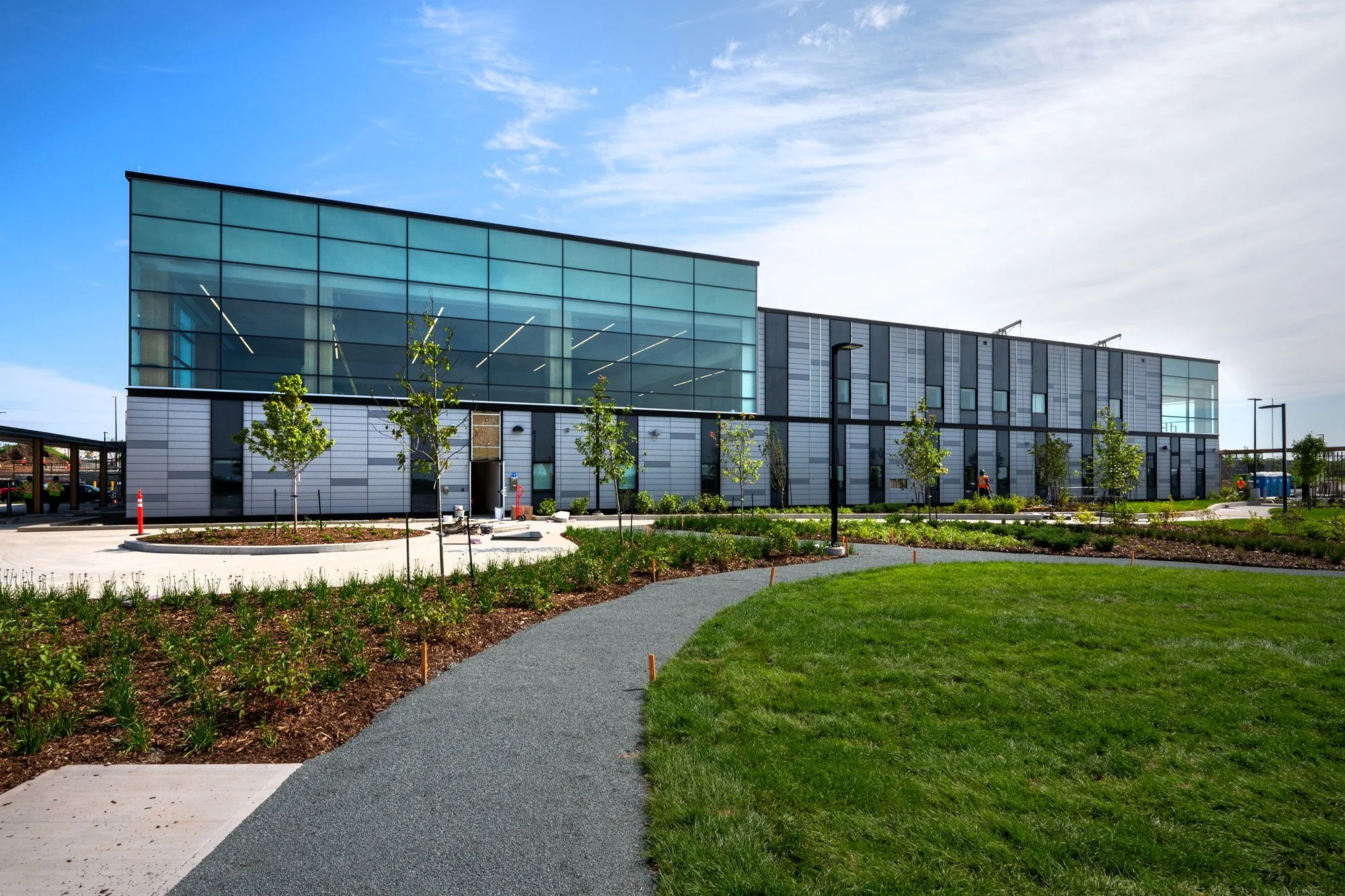
At the Bayers Lake Community Outpatient Centre, the team used Clockworks data and worked closely with construction and trade partners to reduce natural gas consumption by roughly 70%. Key strategies included:
Optimizing air handling unit controls
Enhancing heat recovery chiller sequences
Insulating air handling unit humidifiers
Improving pump sequencing
Increasing unoccupied ventilation setbacks
Driving to Zero Emissions: Materials
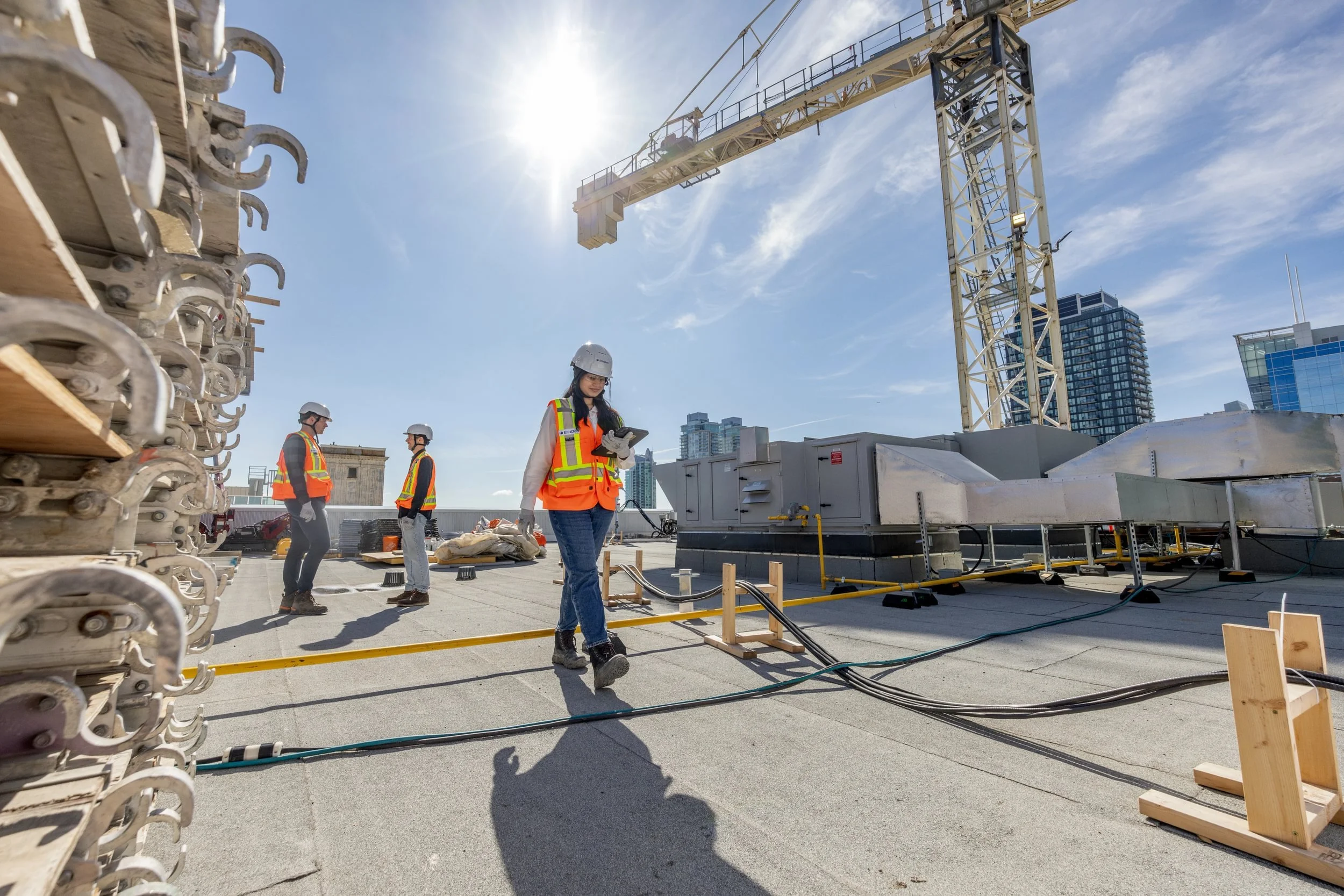
The carbon contained in our building materials significantly affects our total emissions. To meet EllisDon’s climate objectives, it is essential that we identify the emissions associated with products like concrete and steel, as well as those from specific projects. This knowledge allows us to strategically target our efforts to reduce these emissions. As disclosure of embodied carbon is still in the early stages in Canada, we’re collaborating with clients, designers, sub-trades, and suppliers to raise awareness and support the development of short- and long-term solutions facilitating the transition to a low-carbon economy.
Through these collaborations, we aim to:
Increase supply chain transparency.
Work with industry on scalable solutions.
Provide tools to measure embodied carbon on-site.
Show market demand for cleaner production methods.
Support policies and markets for sustainable, low-carbon materials.
Low Carbon Concrete
EllisDon possesses extensive expertise in concrete science and material performance, positioning the company as a leader in low carbon concrete innovation. We provide guidance and support to clients, design professionals, and suppliers concerning targets, constructability, scheduling impacts, and competing project objectives. Our team collaborates closely with suppliers, communicating project requirements and facilitating understanding of necessary trade-offs. This systematic approach fosters alignment among all stakeholders and readiness for the challenges associated with low carbon concrete initiatives. In addition to considering advanced short-term solutions from ready-mix partners, EllisDon is thoroughly assessing emerging technologies with long-term potential.
We are working towards making the procurement of low carbon concrete, and other materials, standard practice: our updated concrete procurement documents require data collection and a commitment to tracking carbon intensity. We continue to define the process to operationalize this, including through project execution, and to collect data on the as-built conditions to further inform the process.
Innovation Profiles
PROJECT HIGHLIGHT
New Surrey Hospital and BC Cancer Centre
SURREY, BRITISH COLUMBIA
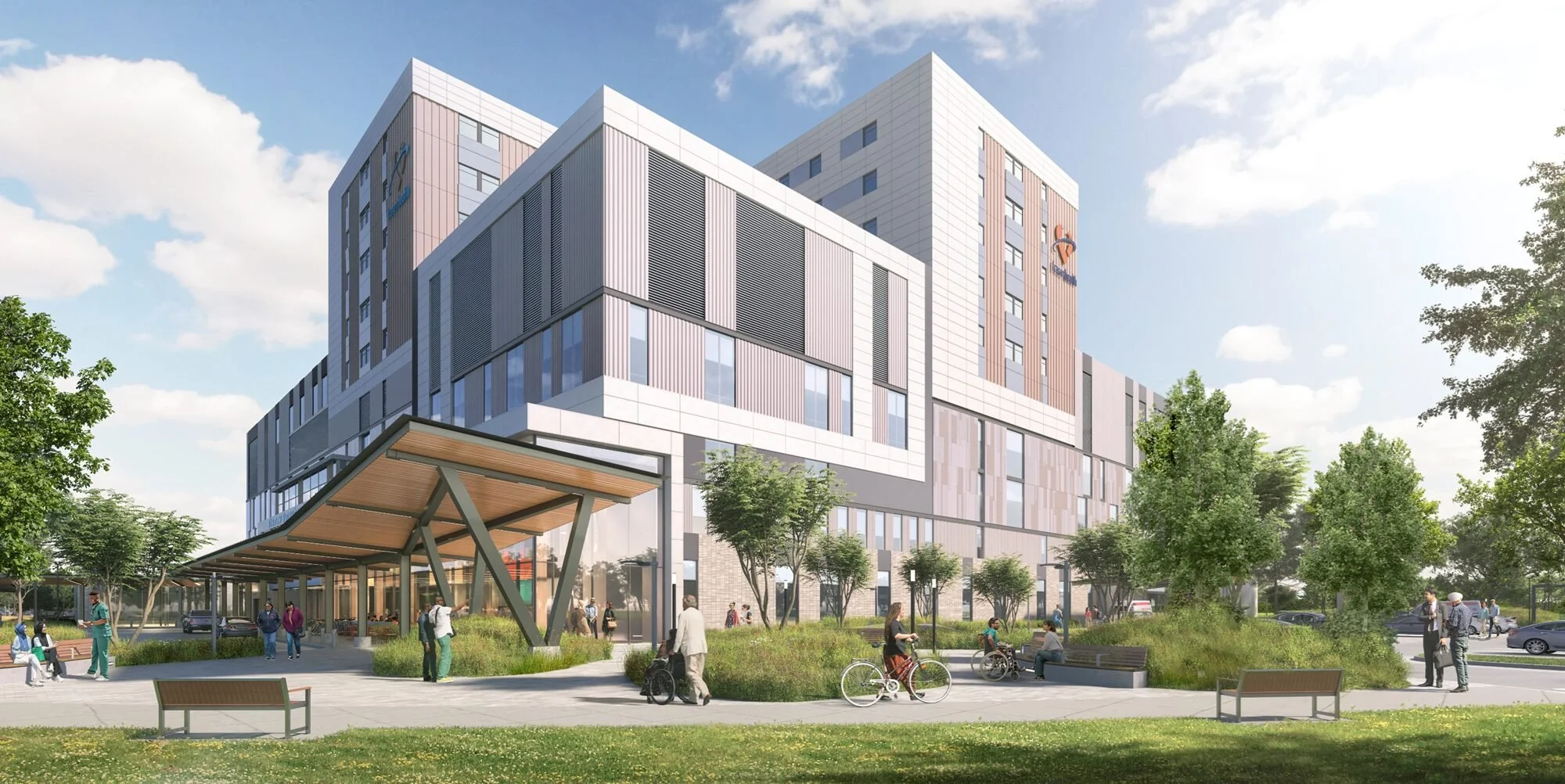
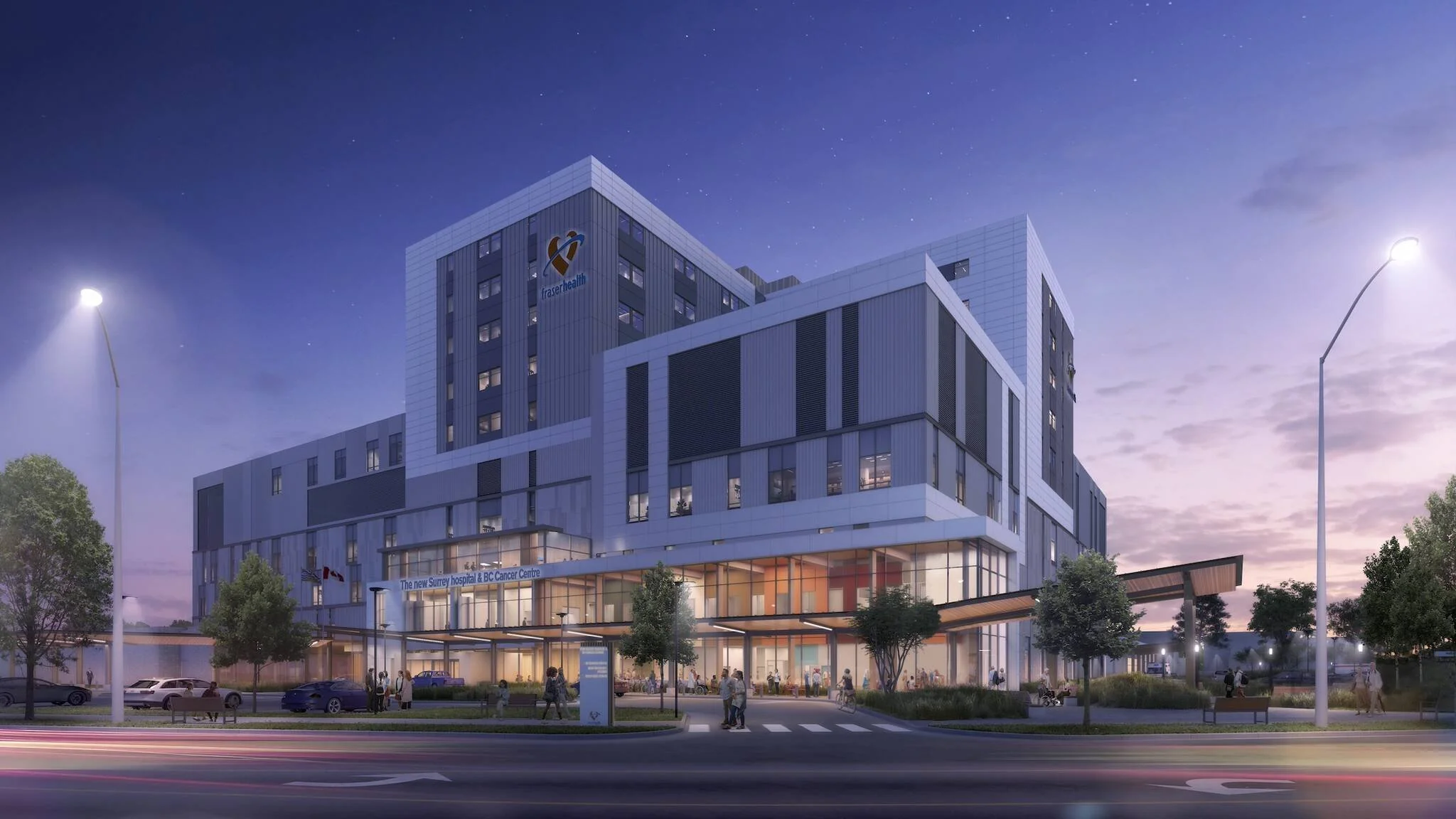
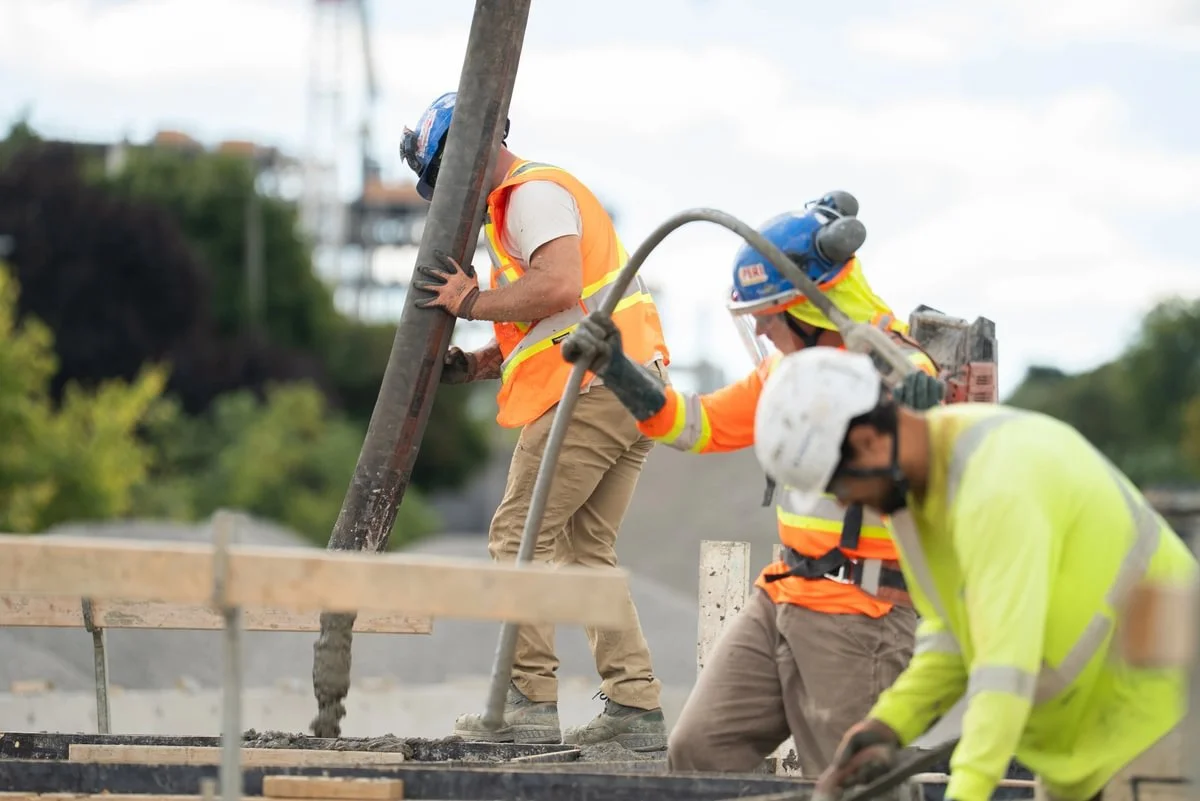
EllisDon’s work on the new Surrey Hospital and BC Cancer Centre project demonstrates a multifaceted approach to embodied carbon reduction, with significant results achieved through both structural redesign and concrete mix optimization. The team adopted a revised diaphragm wall (D-wall) system early in the project, which removed the need for buttresses and multiple tiebacks, saving approximately 9,600 m³ of concrete, 2,400 tonnes of rebar, and 9,600 metres of anchor bars.
Additionally, the team focused on optimizing underground concrete mixes and raft slabs, two significant material components. Initial mix designs were identified as overdesigned and not optimized for carbon performance. Continuous collaboration with the concrete suppliers led to revisions in the mix designs to enhance durability and performance while reducing embodied carbon. One outcome was a modified plan for the raft slab that eliminated the use of Self-Consolidating Concrete (“SCC”), originally specified, resulting in reductions in resource consumption and carbon intensity.
Together, these efforts led to an estimated reduction of over 5,300 tCO₂e in embodied carbon, supporting the project’s LEED certification objectives and showcasing how early collaboration, design decisions, and supplier engagement can drive meaningful sustainability outcomes in complex healthcare infrastructure.
m³ of Concrete Saved
Tonnes of
Rebar Saved
Metres of Anchor Bars Saved
tCO2e Embodied
Carbon Reduction
Hybrid Timber Floor System
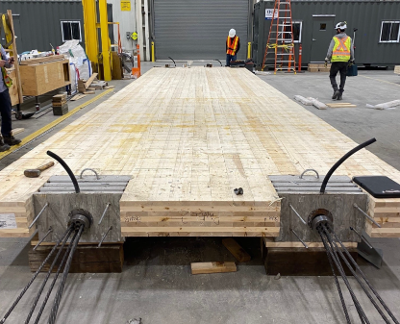
In collaboration with Dialog, EllisDon has patented the Hybrid Timber Floor System in Canada, the US, and China. The system combines cross-laminated timber with post-tensioned concrete in a prefabricated, off-site process, enabling longer structural spans not achievable with conventional mass timber. Ideal for commercial and institutional buildings, it’s particularly suited to multi-storey projects aiming to reduce embodied carbon.
Preliminary estimates indicate a 20-30% reduction in embodied carbon compared to similar concrete or steel-concrete slab structures. All critical commercialization tests, including factored load and full-scale fire testing, have been successfully completed. Final ultimate load structural testing is planned for early 2026, and the system is now ready for deployment.
Low-Carbon Facades
While efforts to cut emissions have largely focused on structural materials, building facades represent the next major opportunity for carbon reduction. EllisDon is advancing this frontier by identifying quick wins, addressing knowledge gaps, and partnering with industry leaders to accelerate innovation in low-carbon envelope design. As policies and standards evolve, we expect these practices to become integral to how we design, select, and procure facade systems.
We are currently leading a research and development initiative to develop a low-embodied-carbon facade system that reduces panel weight, optimizes material mixes, and enhances cost efficiency. Leveraging Ultra-High-Performance Concrete, mass timber, and our expertise in precast systems, the project emphasizes constructability and scalable manufacturing to bring sustainable solutions to market.
In late Fall 2025, we finalized our partners and started early design work. Small-scale constructability mock-ups will take place in Spring 2026.
Industry
Collaboration
Construction is a team sport, and collaboration is vital for delivering high-performance, low-carbon buildings and infrastructure. We must change not only how we conduct our own business but also join forces with clients, partners, competitors, suppliers, and governments to drive systemic sustainability changes across the industry.
We continue to collaborate with manufacturers, policymakers, and other stakeholders to inform legislation by sharing our expertise. Notable contributions include the Vancouver Building By-law, the City of Victoria’s development of embodied carbon reporting, and the Federal Treasury Board’s steel procurement standards. Our active involvement in CAGBC committees - such as the Embodied Carbon Technical Advisory Group and the Zero Carbon Building Steering Committee - supports the evolution of green building and zero carbon programs. Furthermore, our insights have informed the ‘Burying Carbon in Buildings’ project, led by CAGBC and the University of Toronto. This project evaluates Canadian market readiness for Carbon Capture and Utilization in Cementitious Materials (“CCU-CBM”) and explores pathways for future market expansion.

ENVIRONMENTAL
MANAGEMENT
As a global construction services company, EllisDon recognizes the environmental impact of our work. In combination with our efforts to reduce carbon emissions, we strive to continuously improve our environmental performance and minimize our ecological footprint.
Environmental stewardship is embedded in our core values, with a comprehensive program that considers pollution prevention, reduction of construction waste, water quality and management, and ecological preservation and restoration. These programs align with our broader commitment to sustainable development, allowing us to not only meet regulatory standards but also exceed them, all while contributing positively to the communities and clients we serve.
EllisDon’s Environmental
Management System
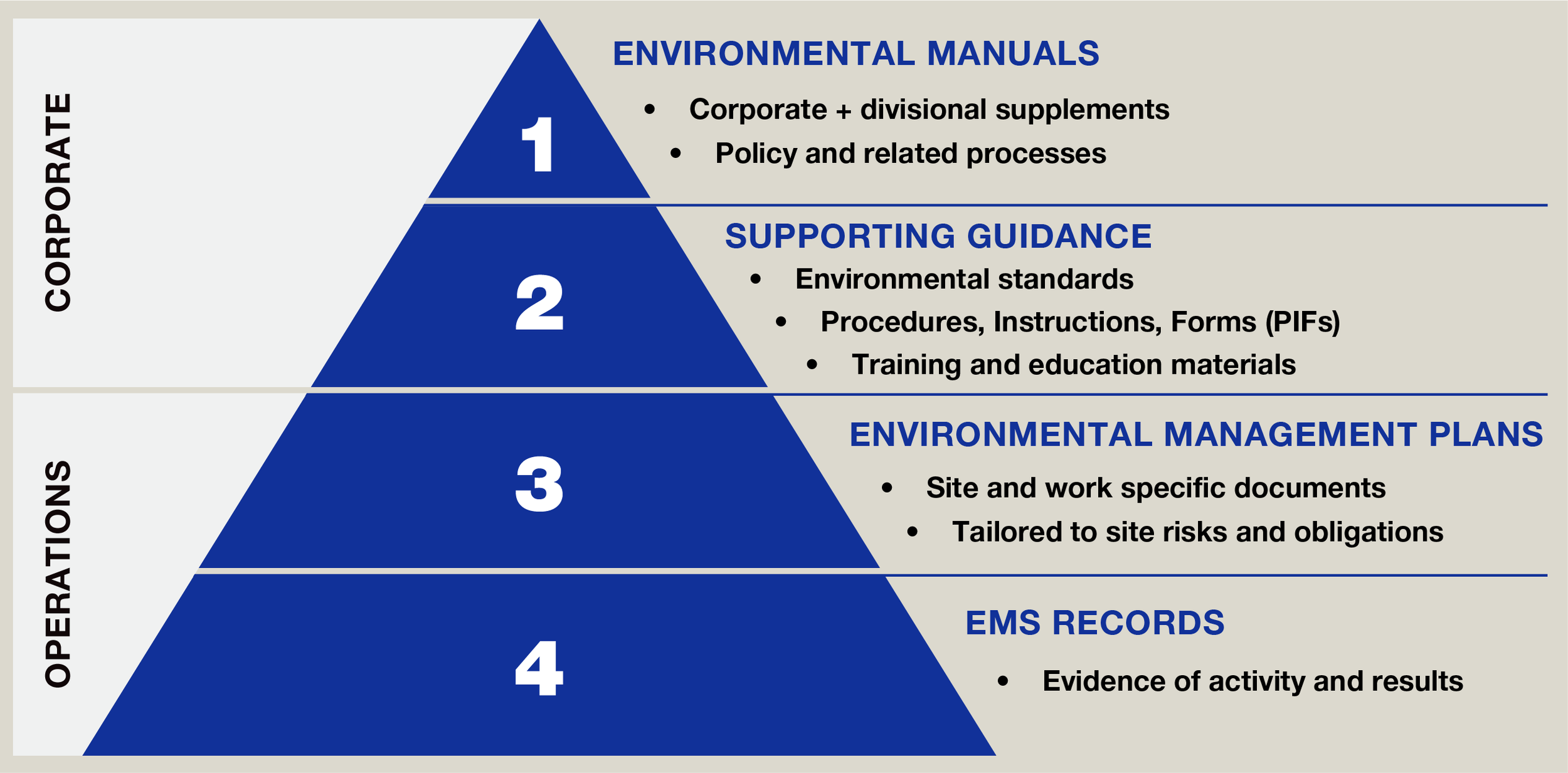
EllisDon’s environmental policies and processes help us meet, and exceed, our objectives and regulatory obligations.
-
Our EMS is maintained in accordance with international standards (ISO 14001:2015) ensuring comprehensive coverage of all major construction activities.
-
Under the EMS, each project site develops an EMP, which identifies environmental aspects relating to their project that might require monitoring and/or control. Once the project-specific Environmental Management Checklist is completed, our corporate environmental guidelines provide project teams with the knowledge to develop site-specific EMPs. For more sensitive project sites or complex issues, our dedicated Environmental Team offers specialized support to project teams, ensuring effective mitigation and management.
-
General awareness of site-specific environmental concerns and associated controls is a key part of the project orientation for all workers. This awareness is regularly reinforced through training updates, regular environmental Toolbox Talks, and our “Environmental Expectations” poster found on the Health and Safety boards at all sites. In addition, designated project team members undergo competence training, to ensure they understand sensitive receptors, potential environmental impacts, required controls, and performance criteria necessary to meet environmental objectives.
-
Our environmental performance is assessed through regular inspections, communication to senior management, incident reporting, and program audits. Our corporate software platform tracks minor and major environmental incident data and Key Performance Indicators (“KPIs”), allowing analysis and trend identification. KPIs are shared with management and project teams to ensure mitigation measures are ongoing, effective and proactive.
Protecting the Environment in Extreme Weather
Construction operations continuously face increasing challenges from extreme weather events, a reality becoming more frequent and unpredictable due to climate change. From wildfires to hurricanes, droughts to severe thunderstorms, construction projects must be proactive and prepared to handle a diverse range of weather conditions. Through planning, effective mitigation strategies, and adaptation, EllisDon seeks to reduce the impact of climate change on our projects.
Extreme weather events can significantly impact air, land, water, and habitat quality around construction sites. These impacts often extend beyond the project boundaries, affecting neighbouring communities and ecosystems, including fish and wildlife habitat. In addition to environmental concerns, severe weather events can impact the construction schedule, strain budget, and compromise overall worker safety and performance.
By planning and preparing for extreme weather, construction projects can help mitigate human and environmental risks. To address these concerns a risk assessment is completed for each project. These assessments guide the setup of our construction sites, including the installation of appropriate erosion and sediment control (“ESC”) measures around sensitive areas, effective stormwater management systems, and protocols for safe liquid storage and handling. Ensuring all employees are trained in emergency response and preparedness plans is essential for reducing the risk of catastrophic environmental incidents and ensuring worker safety.
Case Studies
Spill Management
Environmental spills are one of the most common incidences resulting from construction. They are classified as the unintentional release of a substance that can adversely affect the environment, human health, or infrastructure.
EllisDon is committed to preventing environmental spills resulting from our construction activities. Through comprehensive training and spill response awareness, our goal is to capture all environmental spill incidents while reducing serious and reportable spills on all project sites.
Spill prevention and response plans are tailored to each site’s risks, with consideration for project location, scope of work and environmental sensitivities. This directs the operational controls and mitigation needed along with the location of response supplies.
We track both ‘reportable’ and ‘non-reportable’ spills. ‘Reportable’ spills are those that must be disclosed to regulatory agencies, while ‘non-reportable’ spills are recorded internally. This system allows us to analyze the frequency, severity, and location of incidents, helping us spot trends and mitigate risks. We have seen an increasing trend in the reporting of minor environmental incidents, providing valuable insights into patterns to assist in preventing larger spill incidents.
The most common spills are minor equipment fluid and sediment releases, contributing approximately 70% of internally reported spills. The consistent capture of these environmental incidents provides data that supports the development of lessons learned, environmental toolbox talks, and ongoing alerts. These programs empower our teams to prevent avoidable environmental releases and further enhance site safety and environmental preservation.
Waste Management
Construction projects inherently generate waste materials requiring specialized handling. EllisDon has a corporate waste management plan that commences at the pre-planning phase of certification-based projects. In addition, accurately forecasting waste streams is essential to leading the construction industry's transition to a circular economy and setting new benchmarks for best practices. Our waste management strategy incorporates diverse recycling alternatives, clear and effective signage, continuous waste stream monitoring, and a dynamic approach adapting to evolving project needs.
Any unavoidable waste generation is sorted by waste stream and removed by registered haulers. Hauling companies are asked to provide supporting documentation including letters of attestation confirming the end-use of hauled materials, legitimacy of diversion, weigh bills, and/or waste diversion summaries.
EllisDon’s waste tracking is currently geared toward projects pursuing third-party certifications. Under these projects, we have consistently demonstrated the ability to meet and exceed the waste management targets set by leading certification programs like LEED. We are using these projects to provide data that can be utilized to inform implementation on other projects. This broader approach allows for a more comprehensive baseline, leading to more accurate waste projections during early planning, enabling us to set ambitious, data-driven diversion and reduction goals for future projects.
Water Management
As our construction services do not use a significant quantity of water, our primary concern is the water quality and management. Stormwater management, excavation dewatering, and concrete washout, are critical aspects that require controls on our construction projects.
A proactive incident prevention approach is essential to ensuring water is managed responsibly on-site. The release of contaminated water into watercourses or sewer systems can be difficult to remediate, potentially causing ecological impacts and lead to regulatory action or fines. To address these concerns, EllisDon has implemented a range of measures, including:
Minimizing Disturbed Areas: Reducing the extent of land disturbance to limit erosion and sediment displacement.
Stormwater Flow Management: Controlling the direction and volume of stormwater to prevent uncontrolled runoff.
Erosion and Sediment Control: Implementing best practices to prevent soil erosion and contain sediment.
Containment Ponds and Tanks: Using temporary ponds and tanks to store and treat water on-site.
Water Quality Testing and Treatment: Regularly testing and treating water to ensure it meets environmental standards.
Monitoring Groundwater and Discharge: Tracking the quantity of groundwater extracted and discharged to maintain compliance. Ensuring concrete trucks are equipped with on-truck enviro buckets or designated washout areas that capture wastewater and slurry.
Surface and Groundwater Monitoring: Monitoring parameters such as turbidity, pH, and temperature, and water levels, to detect and address issues early.
Case Studies
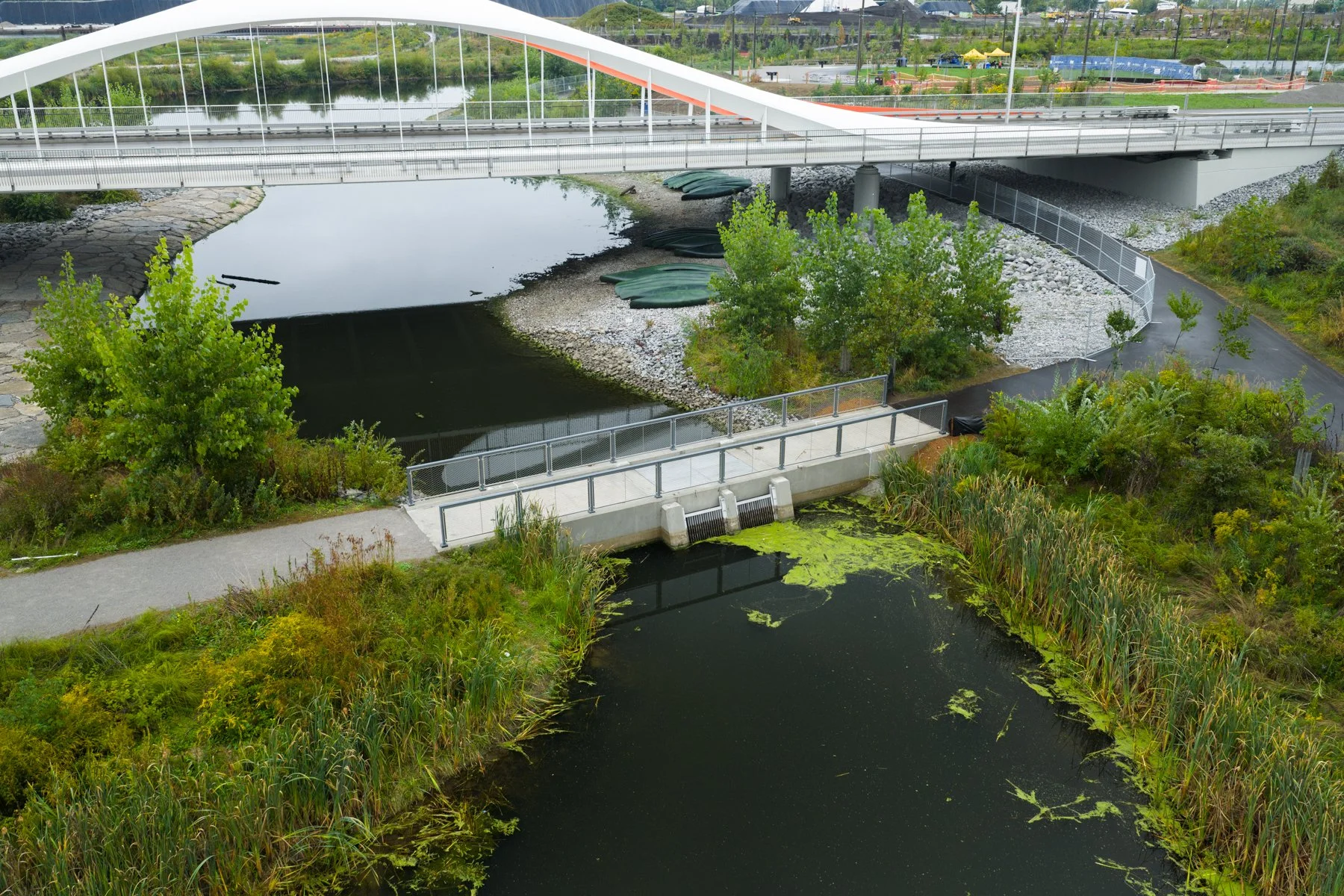
Our Looby division has extensive experience working in and around watercourses. Their expertise in constructing large bridge projects while ensuring appropriate planning, mitigation, and controls are in place, serves as an exemplary model of effective water management.

Ecosystem Restoration and Biodiversity
Aligned with our core values, EllisDon is committed to minimizing negative impacts on the communities where we operate and maximizing positive contributions whenever possible. Protecting biodiversity and restoring ecosystems are key aspects of this commitment, as they play a vital role in maintaining the health and resilience of our planet, ensuring a sustainable future for all.
A common scenario on many of our project sites involves the nesting season of migratory birds. While we take steps to discourage birds from nesting within active work areas, we prioritize their protection when nests are established. In such cases, we create protective buffers and adjust our work schedules to avoid disturbance, allowing the birds to safely occupy the area until the nest is naturally vacated. This approach reflects our dedication to preserving local ecosystems and supporting biodiversity, even amid construction activities.
Wildlife Observation and Records
EllisDon leverages in-house expertise to compile visual records documenting successful hatching of nesting species, contributing to the biodiversity of species present on project sites. This internal monitoring capability allows us to develop species-specific setbacks, management plans, and data-driven strategies.
Additionally, we collaborate with local wildlife rescue organizations to enhance the survival and refuge of species encountered on our sites. Examples of our observation logging and mapping include tracking migratory birds and their nests, identifying animal and fish spawning habitats, and monitoring amphibian locations.
We also utilize specialized software to track and log wildlife encounters on construction sites, which provides crucial feedback and insights to projects across Canada. This data helps promote sustainable construction practices, supports compliance with regulatory and permit requirements, and informs long-term conservation efforts. As we continue to expand our efforts to capture and manage wildlife interactions on project sites, we strengthen our commitment to environmental stewardship and enhance our reputation for sustainability.